The College Council approves the new strategic plan for the College for the years 2026-2030.

 The Faculty of Engineering Council at Assiut University, in its 1153rd session held on January 13, 2026, approved the new five-year strategic plan for the Faculty for the years 2026-2030. The Faculty's Strategic Planning Office was tasked with monitoring the implementation of the plan's various activities, preparing periodic reports on progress, and presenting them to the Faculty Council on a regular basis.

The adoption of the college's new strategic plan came after a significant effort spanning more than a year. The college administration and the plan preparation committee ensured the participation of all stakeholders involved in the college's academic, research, and service activities. This included faculty members, teaching assistants, students, administrative staff, alumni, representatives from businesses, and representatives from engineering, industrial, and professional organizations. This participation was evident at every stage of the plan's development, through regular surveys of various components. These surveys covered everything from updating the college's mission and vision, to revising guiding policies, analyzing the current situation and identifying gaps, and finally, defining strategic goals, objectives, and activities. Several workshops were also held for the plan preparation committee, as well as broader workshops with the participation of various stakeholders, to present and discuss the results of each stage of the plan's development.

The Dean of the College expressed his gratitude to the university administration, headed by Professor Dr. Ahmed El-Menshawy, the University President, and the Vice Presidents, for their ongoing support of the college and its various activities and events. He emphasized that the college's plan aligns with the university's strategic plan and fulfills the university's mission, vision, goals, and strategic objectives.

Professor Dr. Khaled Salah, Dean of the College, congratulated the Vice Deans, Department Heads, College Administration, all its staff, the planning committee, and all those involved in preparing the plan on the approval of the strategic plan and the commencement of its implementation.

The Dean of the College had reconstituted the committee tasked with preparing the new strategic plan for the college, to finalize the plan's implementation. The committee included representatives from various beneficiary groups and stakeholders within the college, namely:

1. Prof. Dr. Khaled Salah Saeed, Dean of the College, Chairman

2. Prof. Dr. Mohamed Safwat Mohamed Mohamed, Vice Dean for Education and Student Affairs, Member

3. Prof. Dr. Shehata El-Dabaa Abdel-Rahim, Vice Dean for Graduate Studies, Member

4. Prof. Dr. Mohamed Safwat Mohamed Mohamed, Acting Vice Dean for Community Service and Environmental Development, Member

5. Prof. Dr. Mahmoud Ahmed Abdullah El-Sherif, Head of the Department of Mechanical Design and Production Engineering (representing the Heads of Departments), Member

6. Prof. Dr. Mahmoud Aneib Othman Aneib, Director of the Quality Assurance Unit, Member

7. Prof. Dr. Mahmoud Mohamed Ahmed Awais, Director of the College's Strategic Planning Office, Coordinator

8. Prof. Dr. Abdel-Mottaleb Mohamed Ali Ahmed, Director of the Center for Engineering Studies and Consultations, Member

9. Prof. Dr. Mahmoud Mohamed Ahmed Awais, Director of the Student Training Unit, Member

10. Prof. Dr. Salwa Abdel Rahman Mogahed, Faculty Member

11. Dr. Ahmed Yahya Abdel Azim, Assistant Professor

12. Dr. Shaimaa Adly Abdel Rahman Sayed, Lecturer

13. Eng. Abdel Rahman Hassan Ahmed, Assistant Lecturer

14. Mr. Raafat Bakr Mohamed, College Secretary

15. Eng. Khaled Bakr Moussa, Director of the Urban Planning Authority Office in Assiut

16. Mr. Wael Hanna Sadek, Administrator at the Center for Engineering Studies and Consultations, Committee Secretary

17. Dana Adel Mosaad, Third Year Student, Mining and Metallurgical Engineering Department

 
 1
11


The College of Engineering is organizing a workshop to discuss strategic goals, objectives, and activities within the fifth phase of preparing the college's new strategic plan.

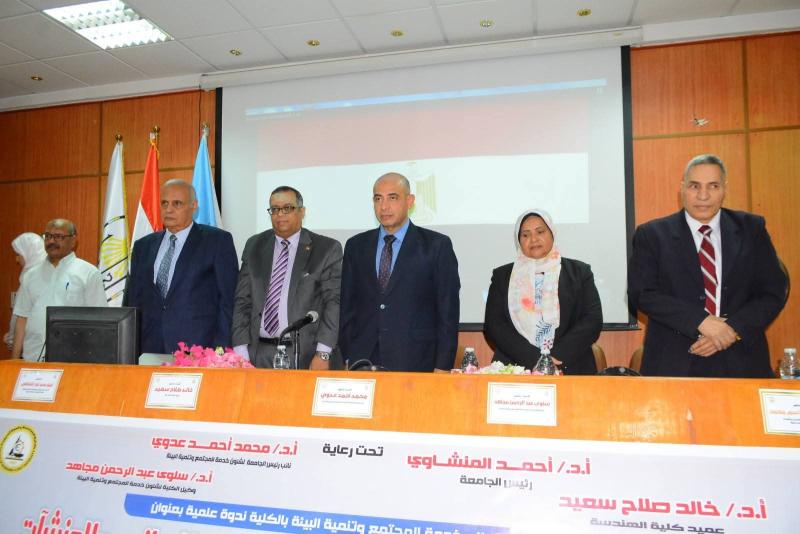
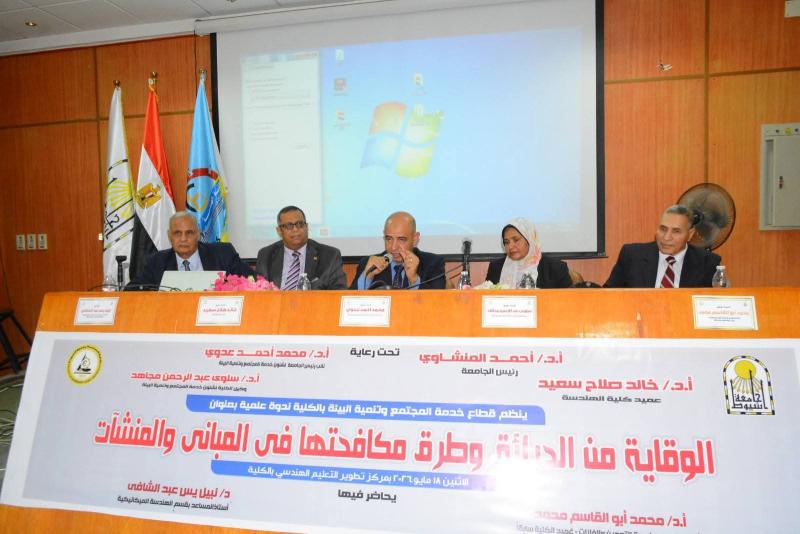
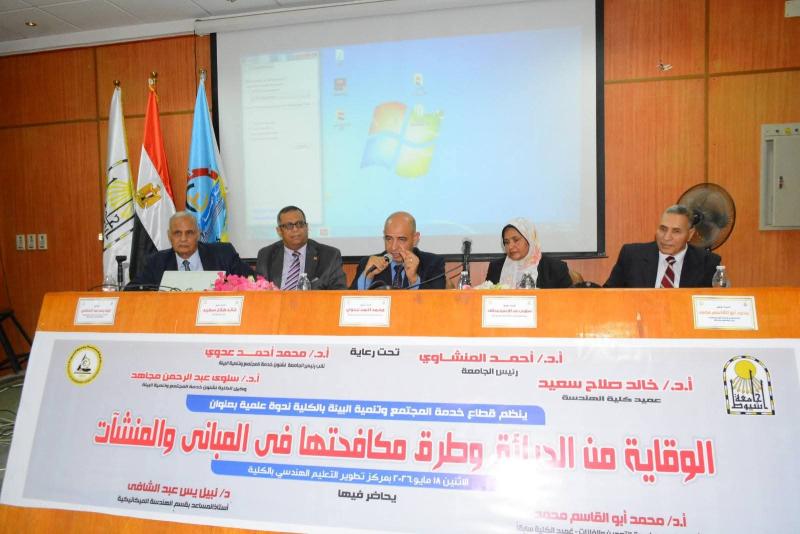
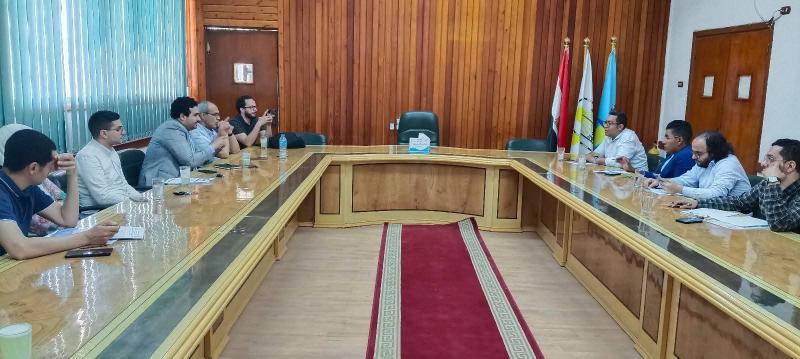
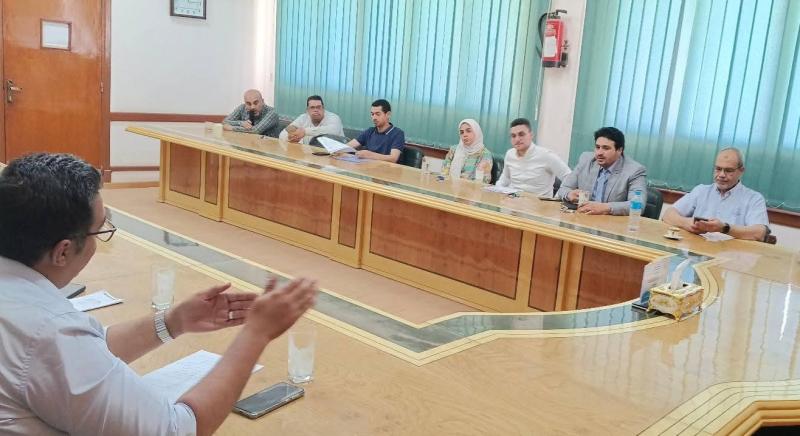
 Under the patronage of Professor Dr. Ahmed El-Menshawy, President of the University, and the supervision of Professor Dr. Khaled Salah, Dean of the Faculty, the Faculty of Engineering at Assiut University organized a workshop on Sunday, January 11, 2026, to discuss the strategic goals, objectives, and activities that can be achieved.

Professor Dr. Khaled Salah, Dean of the Faculty, spoke about the various steps taken in preparing the plan, culminating in the identification of the strategic goals, objectives, and activities. He noted the participation of various stakeholders within the Faculty in this process, which is a prelude to presenting the plan to the Faculty Council for approval and implementation.

The Dean explained that the plan and its study were based on several important guidelines, including the Faculty's general values, Egypt's Vision 2030, the National Anti-Corruption Strategy, the Higher Education and Scientific Research Strategy in Egypt, the Faculty's guiding policies, the national accreditation standards issued by the National Authority for Quality Assurance and Accreditation of Education, the University's strategic plan, and the principles of sustainable development and continuous improvement.

Professor Mahmoud Awais, Director of the College's Strategic Planning Office, presented the results of studies identifying strategic goals, objectives, and activities. A general discussion of the activities included in the plan followed, and an online survey was conducted among workshop attendees regarding the study results.

The workshop was led by Professor Dr. Khaled Salah, Dean of the College, and attended by Professor Dr. Mohamed Safwat Abu Raya, Vice Dean for Education and Student Affairs and Supervisor of the College's Agency for Community Service and Environmental Development; Professor Dr. Shehata El-Dabaa Abdel-Rahim, Vice Dean for Studies, Consultations, and Research; Professor Dr. Ibrahim Mohamed Ismail, Director of the University's Quality Assurance Center; Professor Dr. Mahmoud Anib Othman, Director of the College's Quality Assurance Unit; Professor Dr. Mahmoud Awais, Director of the College's Strategic Planning Office; and all members of the plan preparation committee. Also present were the heads of departments: Professor Dr. Mohamed Abdel-Basset Abdo, Head of the Civil Engineering Department; Professor Dr. Mahmoud El-Sherif, Head of the Mechanical Design and Production Engineering Department; and Professor Dr. Mohamed Abbas Abdel-Radi, Head of the Electrical Engineering Department. Professor Dr. Mohamed Safwat Abu Raya, Supervisor of the Mining and Metallurgy Department and the Mechanical Power Engineering Department, also attended. Several members of the College Council, faculty members, teaching assistants, and Mr. Raafat Bakr, the College's Secretary General, were also in attendance.

The workshop was attended by representatives from several engineering institutions, including Engineer Khaled Bakr Moussa, Head of the Regional Office of the Urban Planning Authority in Assiut and a member of the college's strategic plan preparation committee; Engineer Nevin Salah Deif, Deputy Head of Engineering Experts at the Ministry of Justice in Assiut and a member of the college's Quality Assurance Unit Board; as well as faculty members, teaching assistants, postgraduate and undergraduate students, college administrative staff, and alumni. The head of the college's student union also participated.


Effect of greywater reuse on hydraulic performance of water supply pipes networks

Research Abstract

Water scarcity and declining hydraulic performance of water supply pipe networks have increased the difficulty of providing

reliable water services. Greywater reuse represents a potential approach to alleviating these challenges. This study evaluates

the effects of greywater reuse on the hydraulic performance and reliability of a water supply pipe network. Three greywater

reuse scenarios are considered: no reuse, satellite reuse, and on-site reuse, each examined for two water supply configurations,

with and without roof tanks. Hydraulic performance is assessed using a case study network modelled in WaterGEMS.

The results indicate that on-site and satellite greywater reuse increase pressure head by approximately 18% and 20%, respectively,

under peak demand conditions. However, greywater reuse also leads to reduced flow velocities, with values below 0.5 m/s

in certain pipes at peak demand, increasing the potential for sediment deposition. Reliability analysis under critical pipe failure

conditions demonstrates that greywater reuse substantially improves network resilience. In addition, fourteen combined

demand reduction and greywater reuse scenarios are analysed, showing that integrated strategies can reduce overall potable

water demand by up to 42.8%.

Research Authors
Hassan Ibrahim Mohamed Mohamed
Research Date
Research Journal
water practice and Technology
Research Pages
33
Research Publisher
IWA publishing
Research Rank
water resources
Research Vol
Vol. 21 No. 4
Research Website
https://iwaponline.com/wpt/article/21/4/1223/106958/Effect-of-greywater-reuse-on-hydraulic-performance
Research Year
2026

Toward an Integrated Intelligent Framework for Crowd Control and Management (IICCM)

Research Abstract

Managing large-scale gatherings, such as global festivals, sporting events, and religious congregations, presents substantial challenges in ensuring crowd safety and control. Innovative frameworks are essential to address these complexities effectively. The Integrated Intelligent Crowd Control and Management (IICCM) framework combines cutting-edge technologies, including Computer Vision (CV), Artificial Intelligence (AI), and the Internet of Things (IoT), to enhance participant safety and optimize crowd management. CV enables precise real time identification and tracking, AI analyzes crowd behavior to anticipate risks, and IoT gathers environmental data to improve crowd flow, alleviate congestion, and provide timely assistance. Additionally, the framework facilitates emergency evacuation planning by modeling crowd dynamics and identifying safe, efficient escape routes. Although suitable for diverse events, the Hajj pilgrimage—a uniquely large and dynamic annual gathering—provides a rigorous test case for the IICCM framework. Managing millions of participants from varied cultural and linguistic backgrounds highlights the system’s adaptability and robustness. By effectively addressing Hajj specific challenges, the IICCM framework demonstrates its scalability and applicability to other large-scale events. This research offers valuable insights for decision-makers seeking to implement advanced crowd management technologies.

Research Authors
Tarik Alafif, Mohammad Jassas, Alaa E Abdel-Hakim, Ghada Alfattni, Hassan Althobaiti, Mohammed Ikram, Amirah Alharbi, Hussam Alsharif, Mazin Alshamrani, Ebtisam Alharbi, Tahani Alsubait, Abdullah Alhawsawi, Badr Alsolami, Khalid Khayyat
Research Date
Research Department
Research Journal
IEEE Access
Research Member
Research Publisher
IEEE
Research Rank
International
Research Year
2025

Performance assessment of green hydrogen generation using concentrated system of photovoltaic panel with compound parabolic concentrator

Research Abstract

Theoretical work for concentrated solar-operated green hydrogen production system using compound parabolic
concentrator (CPC) integrated with solar photovoltaic (PV) cells driving proton membrane electrolysis (PME)
was developed, analysed, and evaluated under winter and summer conditions. Mathematical models for the
system components, including the CPC-PV integrated unit and the electrolyzer, were developed and solved. Key
system performance parameters were also evaluated. The system of equations was solved using MATLAB. Results
of the mathematical model show that for 1 m2 of the PV panel, the hydrogen production flowrate reaches a peak
on 0.0175 kg/h in summer and 0.0144 kg/h in winter, while the CPC-PV system power output can reach up to
607 W in summer and 590 W in winter. The PV efficiency in the CPC-PV system increases to about 14.75 % in
both seasons. Additionally, the overall system shows a summer and winter efficiency of nearly 13 % with a slight
variation between both seasons. The minimum achieved cost of hydrogen production of the system during
summer and winter is $0.17/kg and $0.271/kg, respectively at concentration ratio of 5. The system shows
promising performance under operation of different concentration ratios provided by CPC-PV system, highlighting
the system ability to enhance the production of green hydrogen gas cost effectively.

Research Authors
Rania S. Nada, Hamdy Hassan
Research Date
Research Journal
Solar Energy
Research Pages
113826
Research Publisher
Elsevier
Research Vol
300
Research Year
2025

Enhancing the performance of low-concentrated solar panel/thermal system via an indirect passive cooling system of phase change material with water

Research Authors
Ramadan Gad, Hamdy Hassan
Research Journal
Applied Thermal Engineering
Research Pages
128125
Research Publisher
Elsevier
Research Year
2025

Enhancing thermal management of lithium-ion batteries using phase change materials and expanded graphite: An experimental study

Research Abstract

Electric and hybrid electric vehicles are promising alternatives to tackle environmental impact and greenhouse
gas emissions associated with internal combustion engine vehicles. Electric vehicles have fueled the need for an
efficient energy storage system to provide high power output, maximum energy density, and rapid charging.
Lithium-ion batteries are a viable alternative as their high power density and energy capacity make them stand
out from their long lifespan and quick charging capabilities. However, thermal energy generated during charging
and discharging can cause safety concerns. In this regard, an experimental study was conducted to assess cooling
performance using four distinct phase-change-materials (PCM): PARA-Block, RT-54 HC, RT-44 HC and RT-35 HC
were tested in a cyclic test, which showed a reduction in the battery's maximum temperature to 59.6 
C, 50.9 ◦ C, 51.9  ◦C respectively, compared to 76.4  C with natural convection cooling. For further modification to
achieve the cell's optimum operating temperature and shape stabilized material, various weight percentages of
expanded graphite (EG) (3 %, 6 %, 12 %, 15 %) were added to obtain composite stable phase change material
(CPCM). The results showed that the battery's highest temperature decreased by almost 55 % by adding 12 % EG
to PCM RT 35 HC compared to natural cooling. In addition, the best conditions were applied for a four-battery
pack.

Research Authors
Mohamed Kh. Saudi, Mohamed Emam, Hamdy Hassan, Hidetoshi Sekiguchi, Ahmed S.G. Khalil
Research Date
Research Journal
Journal of Energy Storage
Research Pages
117427
Research Publisher
Elsevier
Research Vol
130
Research Year
2025

Parametric analysis of water-saturated porous clay structures as evaporative cooling of building integrated photovoltaic systems

Research Abstract

Passive cooling of photovoltaic systems has been demonstrated to enhance their electrical performance at costeffective
methods. Among passive mechanisms, evaporative cooling stands out, particularly when utilizing
water-saturated porous structures. This study explores the parametric analysis of a porous clay structure as an
evaporative cooler for building integrated photovoltaic (BIPV) systems. It examines key parameters such as water
saturation levels and meteorological conditions, including wind velocity and relative humidity, assessing their
influence on system’s cooling performance. A numerical heat and mass transport model, along with the evaporation
model based on energy balance principle were presented and solved for this purpose. Further, experimental
evaluation of material variations was conducted utilizing hollow porous clay and traditional hollow red
brick structures, concurrently validating the numerical model. The experimental results highlight significant
improvements, with a 6 % reduction in peak PV temperature observed when using a porous clay structure
compared to conventional red bricks. The parametric study further revealed a maximum 9.7 % reduction in peak
PV temperature at higher water saturation levels. Notably, PV electrical efficiency and output power showed
peak enhancements of 0.93 % and 1.6 %, respectively, when humidity levels were halved rather than doubled.
Additionally, doubling wind velocity led to a 1.13 % decrease in indoor room temperature compared to halved
velocity values, demonstrating the effectiveness of these parameters in optimizing building cooling and PV
performance. Moreover, water evaporation rates reached a maximum of 6.07 L/h.m
2 and a minimum of 2.4 L/h. m 2 when the wind velocity and humidity values were doubled. Moreover, the system attained its highest water consumption rate of 10.19 L/h.m 2 when wind velocity values were doubled. Hence, these findings offer essential insights, underscoring the considerable impact that different operational conditions have on the effectiveness of evaporative cooling systems.

Research Authors
Mustafa Ghazali Ali, Hamdy Hassan, Sameh A. Nada
Research Date
Research Journal
Energy
Research Publisher
Elsevier
Research Vol
320
Research Year
2025
Subscribe to